
Real reason why resentment is literally killing people
The Hidden Shame Behind Every Resentment That's Slowly Killing You

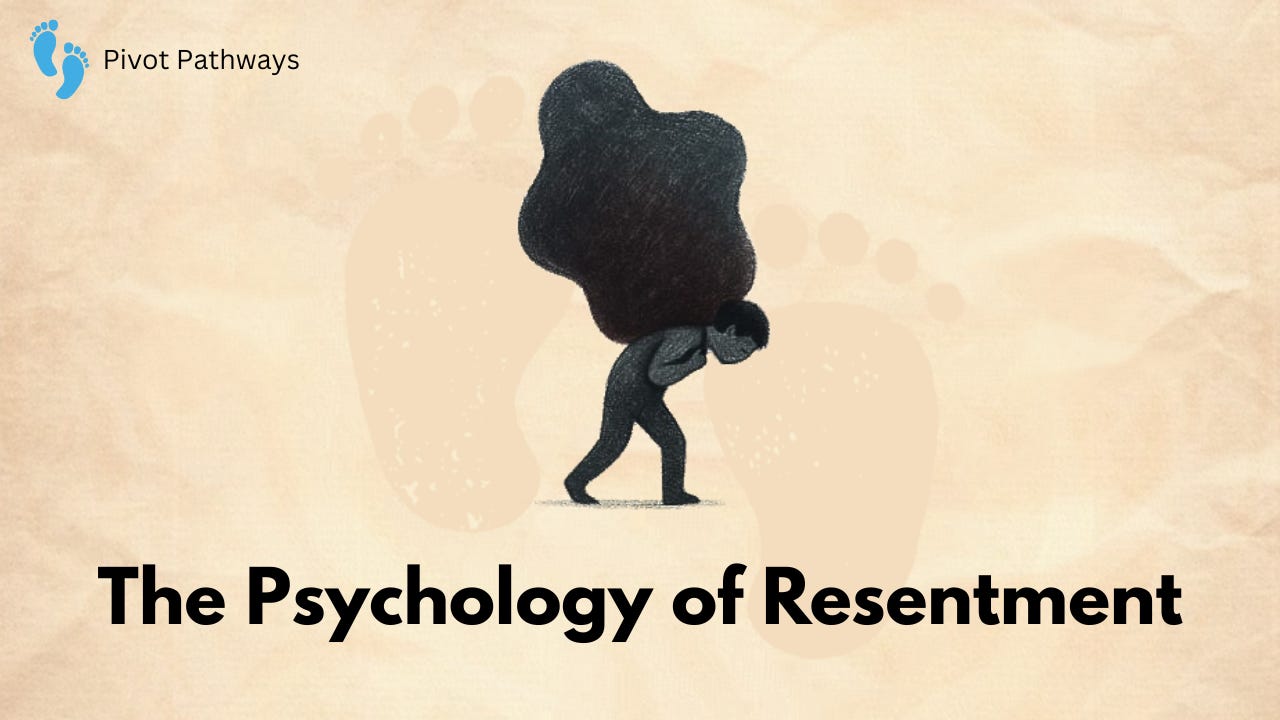
Resentment isn't about the other person - it's about the story you're telling yourself about your own worth. Here's how I figured this out the hard way.
So I've been carrying around this anger for three years. Three entire years of my life spent replaying the same scenario over and over, crafting perfect comebacks in my head, imagining all the ways I could make this person understand how badly they hurt me. Sound familiar?
Then I stumbled across something that completely flipped my understanding of resentment on its head, and honestly, it's been haunting me for weeks now because of how much sense it makes.
The thing about resentment is that we think it's about justice, but it's actually about shame.
Let me break this down because this realization has been a complete game-changer for me.
You know how when someone really gets under your skin, there's this burning feeling that won't go away? Like they've somehow taken something from you that you can't get back? That's not actually anger about what they did - that's your brain trying to process the fact that you've internalized their treatment of you as a reflection of your worth.
Here's what I mean: When someone treats you badly, your mind doesn't just register "this person did something wrong." Instead, it goes straight to "this person did something wrong TO ME, which means there must be something about me that made this okay to do." That's where the real damage happens.
Think about it - you don't resent a thunderstorm for ruining your picnic. You don't harbor grudges against traffic jams or broken appliances. You resent people because people have the power to make you question your own value, and when that happens, your brain goes into protection mode.
The scariest part? Resentment is literally eating us alive.
I'm talking actual physical damage here. The research is pretty clear that chronic resentment leads to ulcers, cardiovascular problems, immune system dysfunction, chronic pain - your body treats unresolved resentment like a constant threat. Your nervous system stays activated, stress hormones stay elevated, and your body starts breaking down from the inside out.
But here's the kicker - even when people get their revenge, even when they "win," the resentment doesn't actually go away. I've seen this happen so many times. Someone finally gets to tell off their toxic boss, or their ex gets what's coming to them, or they prove they were right all along, and... they're still angry. Still carrying that poison.
Because revenge only addresses the surface problem, not the root.
The root is that moment when you let someone else's behavior become evidence about who you are. That's when resentment takes hold - when you unconsciously accept their treatment as a verdict on your worth.
This is why resentment feels so different from regular anger. Regular anger is energy to solve a problem. It's clean and focused and it goes away when the problem gets solved. Resentment is contaminated anger - it's anger mixed with shame and self-doubt, and no amount of external validation can fix that internal wound.
The only way out is through forgiveness, but not the kind you think.
When most people hear "forgiveness," they think it means letting the other person off the hook or pretending what happened was okay. That's not what I'm talking about. I'm talking about forgiving yourself for believing their story about you.
The person who hurt you? They were operating from their own damage, their own limitations, their own issues. Their behavior was about them, not about you. But you made it about you. You took their dysfunction and made it evidence of your deficiency.
That's the part that needs forgiving.
You need to forgive yourself for giving them the power to define your worth. You need to forgive yourself for carrying their toxicity around like it belongs to you. You need to forgive yourself for believing that their inability to treat you well meant something about your value as a human being.
This isn't about being weak or letting people walk all over you. You can still have boundaries. You can still protect yourself. You can still hold people accountable. But you can do all of that without carrying around the poison of believing that their poor treatment reflects poorly on you.
The difference between righteous anger and resentment is crucial here.
Righteous anger says "this is wrong and needs to stop." Resentment says "this is wrong and makes me less than." One motivates healthy action, the other just makes you sick.
I've been working on this with my own situation, and it's weird how different everything feels when you stop making other people's behavior about you. The anger doesn't disappear entirely, but it transforms into something cleaner, something that doesn't eat you alive from the inside.
The hardest part is admitting that the problem was never really with them.
It was with how quickly I was willing to let their opinion of me become my opinion of me. It was with how easily I handed over my sense of self-worth to someone who clearly didn't know how to handle it properly.
That's the real work of healing from resentment - not changing them, not getting them to understand, not making them pay. It's about taking back the power you gave them to determine your value.
Your worth isn't up for debate, and it never was.
The people who hurt you were just broken people doing broken things. It had nothing to do with you and everything to do with their own unhealed wounds. The sooner you can separate their behavior from your identity, the sooner you can stop carrying around their dysfunction like it's yours.
If you found this post helpful, consider Buy me a coffee ☕. Your support means the world to me!
Ready to dive deeper? I share more detailed psychological breakdowns and practical healing strategies with my paid subscribers - plus you get early access to posts like this before they go public. Upgrade Now!🧠✨